
What Exactly Is a Farmhouse?
Exploring history, architecture, lifestyle, design philosophy, and modern interpretations of one of the most beloved home styles in the world.
Introduction: More Than Just a House
When people hear the word farmhouse, they often imagine wide porches, wooden beams, open fields, and the comforting scent of fresh earth after rain. But a farmhouse is far more than an aesthetic or architectural label. It is a story. A philosophy. A lifestyle deeply rooted in practicality, resilience, and connection to the land.
Historically, farmhouses were built out of necessity. Farmers needed shelter close to crops, livestock, and daily work. These homes were not originally designed for decoration or trend — they were built for survival, durability, and function.
Over time, however, what began as purely functional rural dwellings evolved into one of the most admired architectural and interior design styles in the world. Today, farmhouses can be found in countryside landscapes, suburban neighborhoods, and even urban settings — reimagined yet still echoing their humble origins.
The Historical Roots of the Farmhouse
The earliest farmhouses date back centuries. Across Europe, Asia, and the Americas, rural communities built homes using materials readily available — timber, stone, clay, and thatch. Each region developed its own variation based on climate, geography, and agricultural needs.
In colder climates, thick stone walls provided insulation. In warmer regions, large windows and open layouts encouraged airflow. Every structural decision was influenced by environment and livelihood.
The farmhouse was often the center of family life, economic activity, and community interaction. It housed multiple generations, stored harvests, and sometimes even sheltered animals during harsh weather. The farmhouse was not merely a residence — it was the operational heart of a farm.
Core Characteristics of a Traditional Farmhouse
1. Practical Design
Function always came first. Rooms were spacious but straightforward. Kitchens were large because they were workspaces. Mudrooms were essential to keep dirt from spreading inside. Storage areas were plentiful.
2. Natural Materials
Wood beams, hardwood floors, stone fireplaces, and handcrafted cabinetry defined the structure. Materials were chosen for durability and accessibility rather than luxury.
3. Large Porches
Wide front porches served as transitional spaces between indoors and outdoors. They provided shade, social gathering areas, and a place to relax after long workdays.
4. Open Land Connection
Unlike urban homes, farmhouses are integrated into surrounding landscapes. Windows often frame scenic views of fields, barns, or rolling hills.
The Evolution into Modern Farmhouse Style
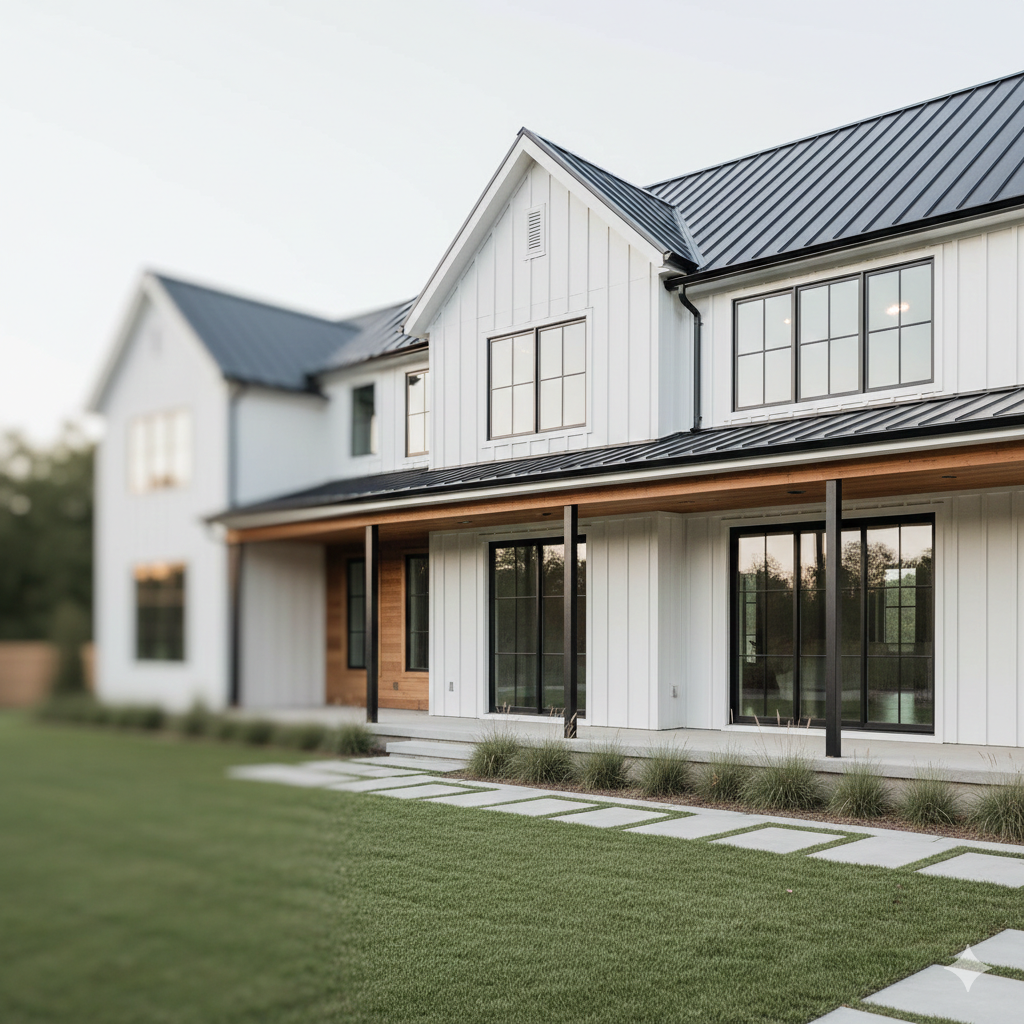
In recent decades, the farmhouse aesthetic has undergone a remarkable transformation. Modern farmhouses blend rustic charm with contemporary comfort. Clean lines meet reclaimed wood. Industrial lighting pairs with vintage textures.
This evolution retains warmth and authenticity while introducing convenience and minimalism. The result is a design language that feels timeless yet fresh.
Today’s modern farmhouse may include:
- Open-concept kitchens and living spaces
- Neutral color palettes with natural accents
- Shiplap walls and exposed beams
- Large kitchen islands
- Black window frames for contrast
The Lifestyle Behind the Farmhouse
A farmhouse is not only about architecture — it represents a slower, more intentional way of living. It symbolizes connection to food, family, and environment.
Even modern homeowners who do not farm often embrace farmhouse living as a return to simplicity. Gardening, home cooking, sustainable choices, and handmade decor all align with the farmhouse philosophy.
It evokes comfort, authenticity, and groundedness — qualities increasingly valued in fast-paced modern society.
Why Farmhouses Remain So Popular
The enduring appeal of farmhouses lies in their emotional warmth. They feel welcoming. They feel real. Unlike ultra-modern designs that may feel cold or impersonal, farmhouses invite gathering and storytelling.
Additionally, their adaptability makes them relevant across generations. Whether rural retreat or suburban dream home, the farmhouse continues to evolve while preserving its core essence: comfort and authenticity.
Conclusion: Defining the Farmhouse
So, what exactly is a farmhouse?
It is a home born from agricultural necessity. It is architecture shaped by land and labor. It is warmth built from wood and stone. It is tradition meeting evolution.
Whether standing alone in vast countryside or redesigned within city limits, a farmhouse represents harmony between people and place — between simplicity and comfort — between heritage and modern life.
Bhor Area Me Verified Farmhouse Plots Explore Karna Chahte Ho?
Legally clear, location-approved farmhouse plot options dekho jo lifestyle aur investment dono angle se safe hon.
Leave a Reply