
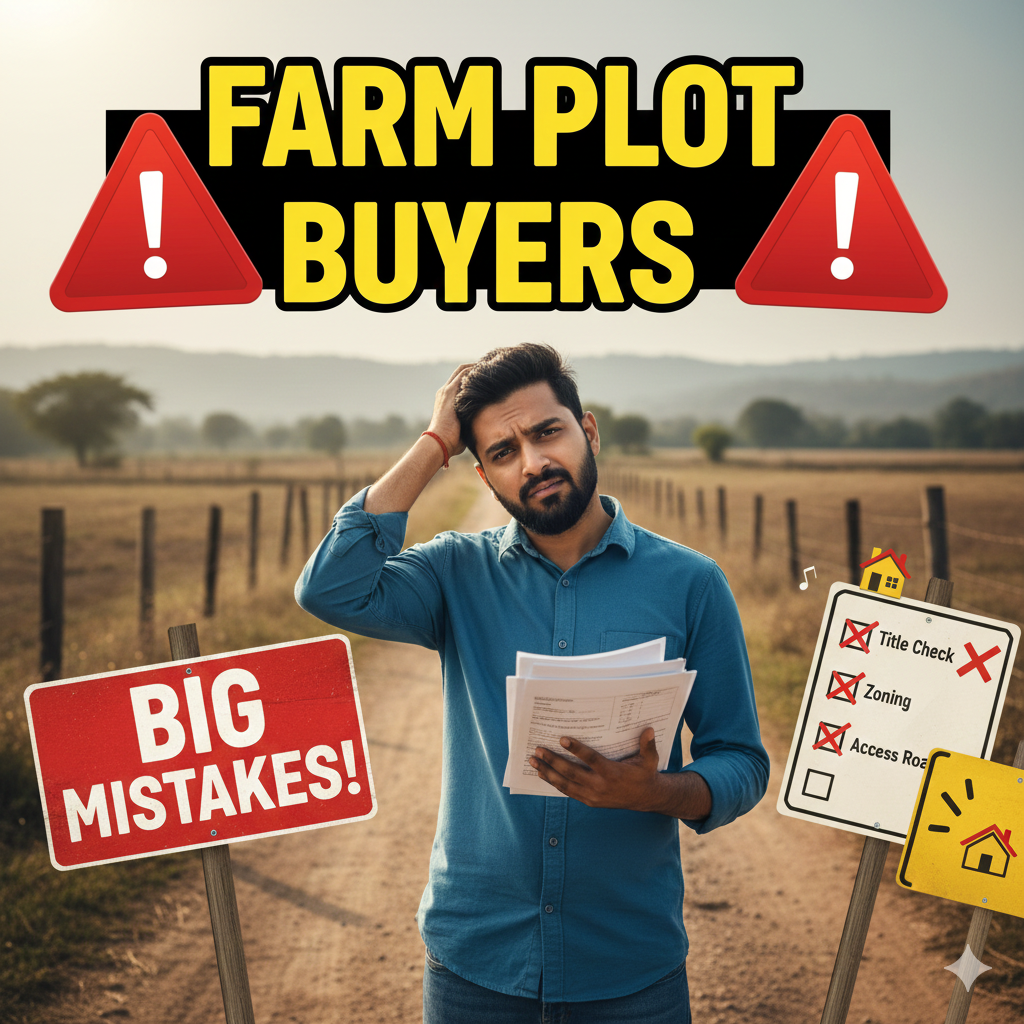
One of the biggest mistakes buyers make is assuming all open land can be used freely.
Many farm plots are classified under agricultural zoning, and certain constructions or commercial activities may not be legally permitted. Buying land without verifying zoning rules can restrict how you use the plot in the future.
How to Avoid It:
- Verify land use classification with local authorities
- Ensure the land is legally approved for agricultural or farmhouse use
- Ask for official land records and zoning certificates
2. Ignoring Clear Title and Ownership History
A clear title is essential when purchasing any land, especially farm plots where disputes are common.
Some buyers rely only on verbal assurances instead of checking ownership documents, which can lead to legal complications later.
How to Avoid It:
- Check the title deed for at least the last 30 years
- Ensure the seller has legal ownership rights
- Consult a legal expert to verify documents
3. Not Verifying Access Road and Connectivity
Many buyers fall in love with scenic farm plots but forget to check proper road access.
A plot without a legal access road can become unusable and difficult to resell.
How to Avoid It:
- Confirm that the plot has a government-approved access road
- Visit the site personally during different seasons
- Check distance from main roads and nearby towns
4. Overlooking Water and Electricity Availability
Water and electricity are essential for farming, construction, and daily use.
Some buyers assume these facilities will be easy to arrange later, only to discover high costs or legal restrictions.
How to Avoid It:
- Check availability of groundwater or nearby water sources
- Verify electricity connection feasibility
- Ask about borewell permissions and water usage rules
5. Falling for Unrealistic Price Offers
Very low-priced farm plots often come with hidden issues such as legal disputes, poor access, or restricted land use.
First-time buyers may focus only on price instead of long-term value.
How to Avoid It:
- Compare prices of similar farm plots in the area
- Understand why a plot is priced lower than market rate
- Focus on legality, location, and future appreciation
6. Not Understanding Local Laws and Regulations
Farm plot regulations vary from state to state and even district to district.
Some areas restrict land purchases by non-agriculturists, while others limit construction size or usage.
How to Avoid It:
- Research local land laws thoroughly
- Confirm eligibility requirements for buyers
- Seek guidance from a property legal advisor
7. Skipping Physical Site Inspection
Online listings and photos can be misleading.
Buying a farm plot without visiting the site personally can result in surprises like uneven land, poor soil quality, or environmental restrictions.
How to Avoid It:
- Visit the plot at least once before purchasing
- Inspect soil, surroundings, and neighboring plots
- Check flood levels, drainage, and terrain slope
8. Not Planning for Maintenance and Security
Farm plots require ongoing maintenance, fencing, and security, especially if they are located in remote areas.
Many first-time buyers do not account for these long-term responsibilities.
How to Avoid It:
- Estimate maintenance and security costs beforehand
- Consider fencing and caretaking options
- Plan for regular visits or local supervision
9. Ignoring Future Development Potential
A farm plot is not just about present use but also future value.
Some buyers fail to consider upcoming infrastructure, road projects, or regional development plans.
How to Avoid It:
- Research government development plans
- Check nearby infrastructure projects
- Choose locations with long-term growth potential
10. Not Taking Professional Advice
Trying to handle everything alone is a common mistake among first-time buyers.
Legal, financial, and technical guidance can prevent costly errors.
How to Avoid It:
- Consult a property lawyer for documentation
- Get expert advice on land valuation
- Do not rush the decision-making process
Leave a Reply